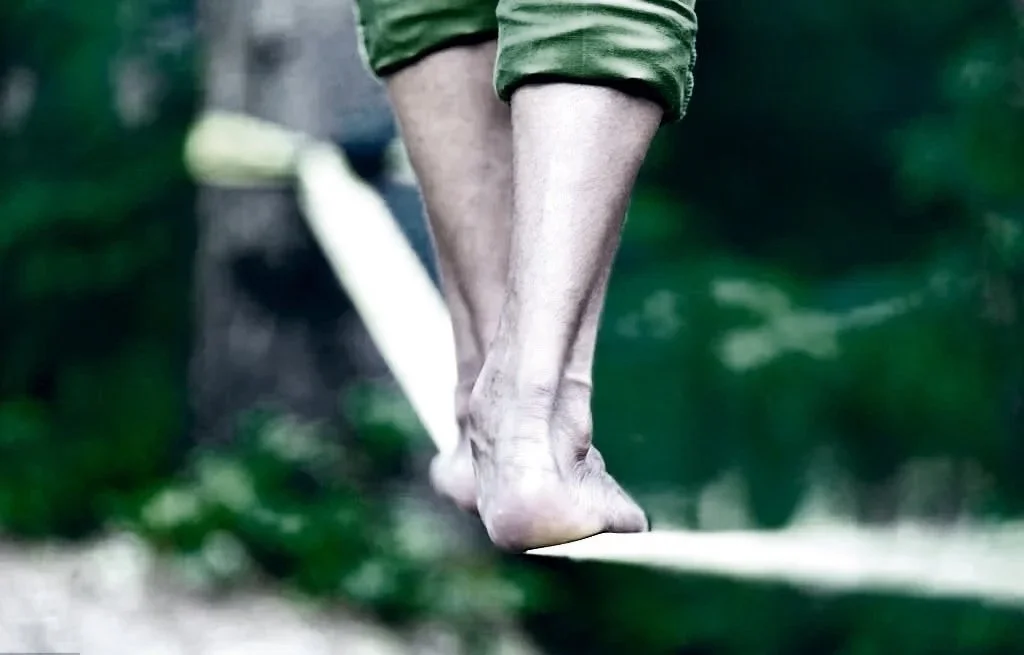
Coming Home to Resilience - Together
Before I ever taught resilience, I had to learn how to come home to it myself. What I’ve learned since is this: resilience isn’t something we build—it’s something we remember, especially in our relationships.
Before I ever taught resilience, I had to learn how to come home to it myself.
For much of my early life, I moved through the world armored up—reactive, easily overwhelmed, insecure, and avoiding conflict whenever I could. What I know now is that beneath that armor was something steady that never left. True resilience.
This past week, my husband and I were invited to offer a two-hour presentation on why mindfulness matters to a peer-to-peer support group at the Boulder Police Department. It was a genuine honor to be welcomed into that room.
Given the intensity of their work, the ability to stay regulated, responsive, and fully present to what’s actually in front of us isn’t just helpful—it’s essential. And in the wider uncertainty and chaos of the times we’re living in, the importance of returning to our true nature of resilience—clarity, courage, curiosity, creativity, confidence, calm in the midst of storms, compassion, and connection—can’t be emphasized enough.
Our resilience is rarely gone; it’s more often covered over by past fears and old wounds—big and small—or by worries about what might come next. Yet in the present moment, we have more capacity than we realize. Even when things are uncomfortable or challenging, there is something in us that knows how to be with what’s here.
As I learned to return to that inner steadiness, something profound shifted. I felt more alive. I experienced more freedom. And my relationships became easier and more fulfilling. I found a greater capacity to stay with complexity, chaos, and conflict—no small thing, considering I used to be a master conflict-avoider. A very skilled ostrich, with my head firmly in the sand.
This is why I’m so passionate about relational resilience—the ability to stay centered in ourselves while remaining open and connected with others. From this place, our natural capacities for compassion, curiosity, and calm—even in the midst of conflict—can emerge.
There’s a sentence I return to whenever life starts to tighten around the edges:
Trust yourself—you’ve made it through every other hardship and hurdle you’ve faced before, so you will make it through this too.
Each time I remember it, something in my chest softens. Not because everything suddenly becomes easy, but because it points to a simple truth we often forget: our resilience doesn’t disappear in hard moments—it simply gets buried under fear, urgency, or old patterns.
In my work with clients and couples, I see how often relationships touch this very place. Not in the dramatic moments, but in the subtle ones—the misunderstandings, the tender edges, the times we’re sure we’re not being seen or met. Relational resilience isn’t about avoiding these moments; it’s about remembering ourselves inside them. It’s the capacity to stay connected to our own inner steadiness while staying open to someone we care about.
When we stay connected in this way, something shifts. We can meet what’s happening with more curiosity and less threat. We can truly hear one another—not defensively, but with understanding. And when we’re truly heard, something softens. We begin to co-regulate. We remember: we’re in this together. From there, a way forward becomes possible.
This is the heart of what we’ll explore together in The Resilience Lab: Relational Resilience on January 17 2025—how to navigate connection when things feel tight or uncertain, and how returning to yourself can strengthen the “us,” not just the “me.”
👉 Come explore what becomes possible when you stay connected to yourself—together.
Beyond the Masks: Finding Real Connection
My parents were less than thrilled when I cut holes in one of our bedsheets so I could move about unseen — invisible, or at least free from the weight of others’ gazes and expectations. I wanted to watch without being watched. I wanted to move through the world without the ache of being noticed, but never fully seen.
I wanted to be free —
Halloween always reminds me how different it was to grow up in the ’70s — when we roamed the neighborhood from after school until long after dark. It was a time when families were shifting from one working parent (usually Dad) to two, and we kids carried our own keys, letting ourselves in and out the front door. We made our own lunches, wandered through long stretches of unstructured time, and claimed the streets as our own little kingdom.
My parents were less than thrilled when I cut holes in one of our bedsheets so I could move about unseen — invisible, or at least free from the weight of others’ gazes and expectations. I wanted to watch without being watched. I wanted to move through the world without the ache of being noticed, but never fully seen.
I wanted to be free — anything other than the shy girl I felt myself to be. Free from the pressure to fit in or earn acceptance. I didn’t want to vanish completely, just fade enough to feel I was okay. And on Halloween night, under the glow of porch lights and the hum of neighborhood excitement, that wish felt almost possible — a small, delicious taste of freedom tucked beneath a flimsy white sheet.
Now, nearly fifty years later, as Halloween approaches, I’ve outgrown my shyness and come to appreciate my uniqueness — my ability to connect, to see and be seen, to stay curious about others. Still, every now and then, I notice a hint of a mask I’m wearing. Mine often shows up as being overly agreeable or quiet — letting people talk over me for fear of being seen as too much, too needy, too unlikeable.
If I named my mask, it would be Agreeable. These days, I usually catch it before it takes over. But when I’m tired or stretched thin — not fully resourced, centered, or grounded in my true essence — it can still slip on without my noticing. The trouble is, when I hide behind that mask, I lose what I most long for: real, deep connection.
Have you ever noticed the masks you wear in your relationships? The subtle ways we protect our hearts — by staying agreeable, withholding what we feel, or showing only what we think others want to see? Vulnerability can feel uncomfortable, yet it’s also the path to genuine connection.
If we want to grow, if we want authentic connection, if we want resilient relationships, we have to get comfortable with being uncomfortable.
At the heart of resilient relationships lies resilience within ourselves. It begins in the body — where life’s unfolding meets our capacity to sense, feel, and respond from a grounded, centered place. When we’re anchored there, we can move beyond the familiar stories of frustration, fear, regret, and projection. From that grounded presence, we gain greater perspective, openness, and heart-centered connection. We meet the moment fully — aware of what’s here now — and discover our truest options for moving forward.
Resilience is wholeheartedness. It’s not about avoiding difficulty but allowing life’s challenges to refine and expand us. Each moment invites us to pause, to notice our choices, and to step closer to what’s true. And when we do, our relationships begin to mirror that presence — becoming more honest, alive, and open to real connection.